

Intermodal Usage
Intermodal railcars come in various types and sizes.
- A smaller type of railcar is a 70-foot single-well railcar, which holds one 40-foot or 45-foot container. A well is a square-shaped bowl in which a container is placed.
- A stack car can hold two 40-foot containers stacked in one well.
- A 325-foot, five-well articulated railcar is one of the largest types.
- An articulated railcar has two or more connected sections that share a truck or set of axles. The sections stay connected and are handled as one railcar.
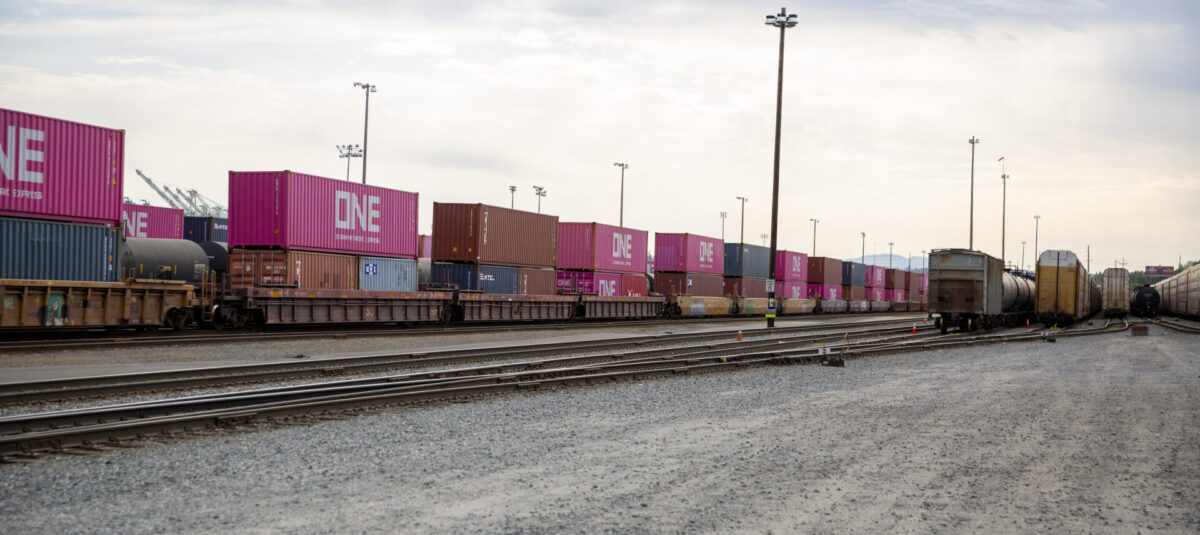
Intermodal rail capacity is measured in two areas:
-
The terminal maximum capacities are based on historical use. Because railcars come in different lengths, not every foot of track can always be used.
For example, when there is room left on a track before a required break for a three-well, but the next railcar in the train is a five-well, the five-well must go either after the break or be moved to the next track. This creates two capacity maximums: one “theoretical” maximum and one “real-world” maximum.
-
Under the Port of Tacoma’s 1:1 agreement with Tacoma Rail, there is one foot of staging track for every foot of terminal track.
If terminal capacity were fully used at a 1:1 ratio, Tacoma Rail would have only a few runaround tracks available for intermodal staging. These tracks allow us to move from one side of the staging yards to the other, but they do not provide enough space for major switching operations.
As freight volumes increase, more pure trains may be used. A pure train carries railcars destined for one terminal, which reduces the amount of switching required.